
🐱 Cat Vaccination Schedule — 2026
| Age of cat | Vaccine |
|---|---|
| 6–8 weeks | 1st FVRCP |
| 9–12 weeks | 2nd FVRCP |
| 12–16 weeks | 3rd FVRCP |
| ≥16 weeks | Final kitten core dose if required to complete the series |
| Around 6 months | Consider a core revaccination according to veterinary assessment |
| Rabies | According to local law and vaccine label; important/core in rabies-endemic areas such as India |
| FeLV | Consider for kittens and cats at risk of exposure; usually 2 doses 3–4 weeks apart |
What is FVRCP?
FVRCP protects against:
- FHV-1 – Feline herpesvirus-1 (feline viral rhinotracheitis)
- FCV – Feline calicivirus
- FPV – Feline panleukopenia virus
WSAVA considers these the major feline core vaccine components. The kitten series should be repeated every 3–4 weeks until at least 16 weeks of age.
Adult cat with no vaccination history
For an adult cat that has never been vaccinated, a practical schedule is:
Day 0: FVRCP – first dose
3–4 weeks later: FVRCP – second dose
Rabies: according to the licensed product and applicable local requirements.
Vaccination should be individualized according to the cat’s age, health, lifestyle and exposure risk.
FeLV vaccination
FeLV vaccination is particularly important for kittens/young cats and cats that have outdoor access or contact with cats of unknown FeLV status. The cat should be tested for FeLV before vaccination. A typical primary series is 2 doses 3–4 weeks apart, starting from about 8 weeks of age.
Important for your book
I suggest putting this heading in the book:
CAT VACCINATION SCHEDULE — 2026
Vaccination is an essential component of preventive healthcare in cats. Core vaccination protects against feline panleukopenia virus, feline herpesvirus-1 and feline calicivirus. Rabies vaccination is particularly important in rabies-endemic countries such as India. Kittens should receive core vaccination beginning at approximately 6–8 weeks of age and at 3–4 week intervals until at least 16 weeks of age. FeLV vaccination should be considered according to the cat’s age and risk of exposure. The final vaccination programme should be decided by a veterinarian after assessing the individual cat and the local disease risk.
For publication: I recommend using “2026 Cat Vaccination Schedule based on WSAVA Guidelines” rather than giving one rigid annual schedule for every cat. Current feline guidelines emphasize individualized risk assessment rather than vaccination based only on whether a cat is “indoor” or “outdoor.”

OUR OT & SURGERY TEAM
In-House Veterinary Surgical Team
At Doctors Pet Care Clinic, we have an experienced in-house veterinary surgical team dedicated to providing safe and comprehensive surgical care for dogs, cats, and other small animals.
Our surgical services include routine procedures such as neutering and spaying, as well as more complex procedures such as urinary and bladder stone surgeries, soft-tissue surgeries, and critical or emergency operations.
Every surgical case is assessed individually, with appropriate diagnostic tests and pre-operative evaluation performed to help ensure the safest possible outcome. During surgery, our veterinary team focuses on anaesthesia management, patient monitoring, surgical care, and post-operative support.
Whether your pet requires a routine operation or a more complicated surgical procedure, our goal is to provide professional, compassionate, and complete surgical care under one r
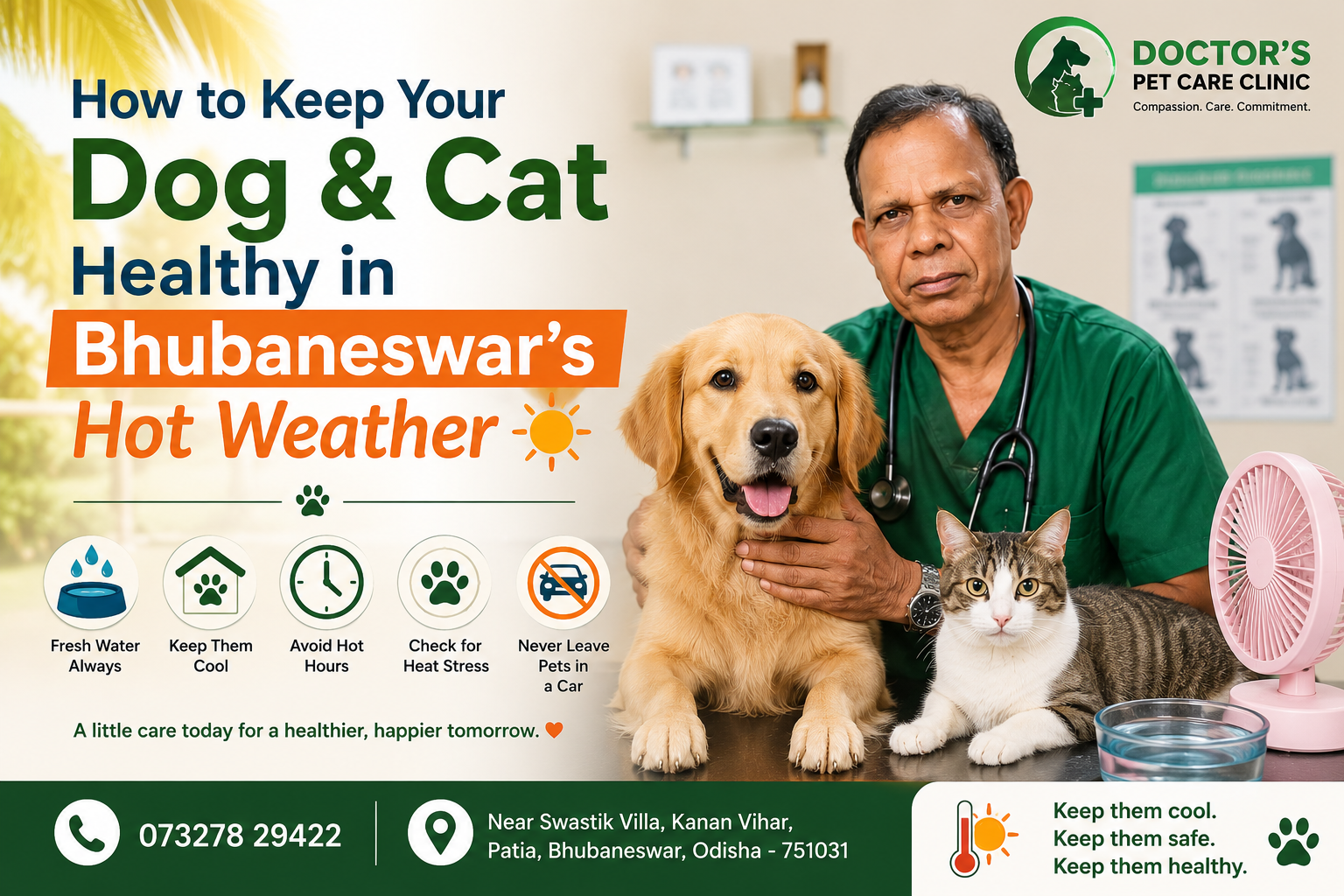
How to Keep Your Dog and Cat Healthy in Bhubaneswar’s Hot Weather
Summer Pet Care in Bhubaneswar: How to Keep Your Dog or Cat Safe
Bhubaneswar can experience very warm weather, and high temperatures can be uncomfortable for dogs and cats. Pet parents need to take additional precautions to keep their pets comfortable and hydrated during hot days.
Whether you have a puppy, adult dog, kitten or cat, simple changes to your daily routine can help support your pet’s wellbeing during summer.
1. Always Provide Fresh Drinking Water
Make sure your pet has access to clean, fresh water throughout the day.
Keep water bowls in convenient locations and check them regularly, particularly during very hot weather.
2. Provide a Cool and Comfortable Space
Your pet should have access to a shaded, well-ventilated and comfortable area.
Avoid keeping pets in enclosed areas that can become extremely hot.
Most importantly, never leave your pet unattended inside a parked vehicle.
3. Choose the Right Time for Dog Walks
During hot weather, try to avoid taking your dog for walks during the hottest part of the day.
Early morning or evening may be more comfortable, depending on the weather.
Also check the pavement before walking your dog because hot surfaces can be uncomfortable for their paws.
4. Watch Your Pet’s Behaviour
Pay attention to unusual changes in your pet’s behaviour during hot weather.
Signs such as excessive panting, unusual weakness, excessive drooling, vomiting, confusion or collapse require prompt veterinary attention.
If your pet appears seriously unwell, contact a veterinarian as soon as possible.
5. Grooming and Coat Care
Regular grooming can help you monitor your pet’s skin and coat condition.
However, avoid making major changes to your pet’s coat without understanding their specific grooming requirements. Different breeds have different coat types and grooming needs.
6. Senior and Vulnerable Pets Need Extra Attention
Older pets and pets with existing health concerns may require additional care during periods of high temperature.
If you are concerned about how your pet is coping with the heat, consult your veterinarian.
Pet Care in Patia, Bhubaneswar
Good summer care starts with simple daily habits. Fresh water, a comfortable environment, appropriate exercise and attention to changes in behaviour can all help your pet stay comfortable.
For veterinary guidance and pet healthcare services in Patia, Bhubaneswar, contact Doctor’s Pet Care Clinic.
📞 073278 29422
📍 Near Swastik Villa, Kanan Vihar, Patia, Bhubaneswar, Odisha – 751031, India