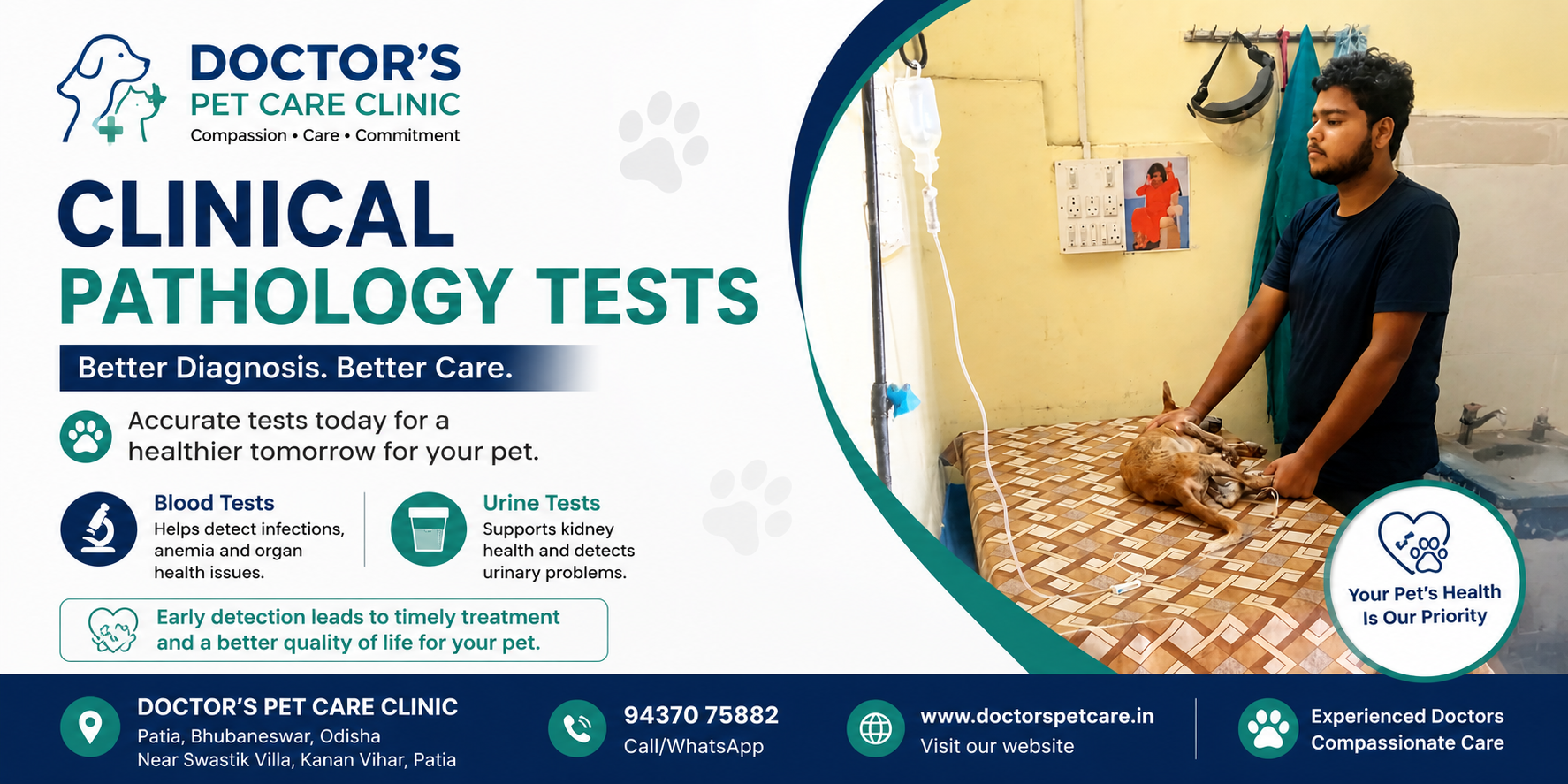
Clinical Pathology Tests for Pets: Why They Matter for Your Dog or Cat
When your pet is unwell, symptoms such as vomiting, loss of appetite, weakness, weight loss, fever, or changes in behavior can have many possible causes. A clinical pathology test helps a veterinarian look beyond visible symptoms and understand what is happening inside your pet’s body.
At Doctor’s Pet Care Clinic, we use appropriate diagnostic tests along with a veterinary examination to help identify health problems early and choose the right treatment for your pet.
What Is Clinical Pathology in Veterinary Care?
Clinical pathology involves examining samples such as blood, urine, feces, and other body fluids or specimens to look for signs of disease or abnormalities.
These tests can provide useful information about your pet’s:
- Blood cells and overall blood health
- Liver and kidney function
- Blood sugar levels
- Signs of infection or inflammation
- Hydration status
- Urinary health
- Digestive health
- Overall health before certain procedures or treatments
A veterinary doctor decides which tests are appropriate based on your pet’s age, symptoms, medical history, and physical examination.
Common Clinical Pathology Tests for Dogs and Cats
1. Complete Blood Count (CBC)
A CBC is one of the most commonly used blood tests for pets. It evaluates different types of blood cells, including red blood cells, white blood cells, and platelets.
It can help a veterinarian investigate conditions such as anemia, infection, inflammation, and certain blood-related disorders.
2. Blood Biochemistry Tests
Blood biochemistry tests provide information about the function of important organs and metabolic processes.
Depending on the tests performed, your veterinarian may assess parameters associated with the liver, kidneys, blood glucose, proteins, electrolytes, and other body functions.
These tests can be particularly helpful when a pet has persistent symptoms or when monitoring an existing health problem.
3. Urine Examination
A urine test can provide valuable information about the urinary system and overall health.
Urinalysis may help detect abnormalities associated with urinary tract problems, kidney disease, diabetes, dehydration, and other conditions.
4. Stool or Fecal Examination
Fecal testing is commonly recommended for puppies, kittens, and pets experiencing diarrhea, digestive problems, or unexplained weight loss.
It may help identify intestinal parasites and other abnormalities affecting the digestive system.
5. Cytology and Other Diagnostic Tests
In some cases, a veterinarian may recommend examining cells or samples collected from a lump, skin lesion, ear discharge, or another affected area.
The appropriate diagnostic test depends on the individual pet and the clinical problem.
When Does Your Pet Need Clinical Pathology Testing?
Your veterinarian may recommend diagnostic testing when your pet has symptoms such as:
- Persistent vomiting or diarrhea
- Loss of appetite
- Unexplained weight loss or weight gain
- Excessive thirst or urination
- Weakness or unusual tiredness
- Fever
- Pale gums
- Skin or coat changes
- Recurring infections
- Changes in urination or bowel movements
Testing may also be recommended as part of routine health monitoring, senior pet checkups, or pre-operative evaluation.
Why Early Testing Can Be Important
Pets cannot tell us when something is wrong. Sometimes a pet may appear relatively normal even when an underlying health problem is developing.
Clinical pathology tests can give your veterinarian additional information that may not be visible during a physical examination alone. Early investigation can help identify potential problems and support timely veterinary care.
However, a test result should always be interpreted together with the pet’s clinical signs, history, physical examination, and other diagnostic findings. A single abnormal result does not necessarily mean that your pet has a specific disease.
Veterinary Diagnostic Care at Doctor’s Pet Care Clinic
At Doctor’s Pet Care Clinic, our experienced veterinary doctors provide professional pet healthcare with a focus on accurate assessment and compassionate treatment.
If your dog or cat is showing unusual symptoms, don’t ignore the changes. Speak with a veterinarian to determine whether clinical pathology testing or another diagnostic examination is appropriate.
Doctor’s Pet Care Clinic
📍 Patia, Bhubaneswar, Odisha
🐾 Veterinary care for dogs, cats, puppies, kittens and other pets
🩺 Veterinary consultation, preventive care, vaccinations, diagnostic support and pet grooming
For more information about our veterinary services, visit https://www.doctorspetcare.in/.